We Have Substack - Youtube - Spotify ++

Where Creative AI Lives
HOME Music Film/Radio Projects<


BUCK

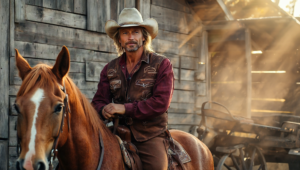
Buck doesn’t sugarcoat life — he just sets it to music. A 40+ country soul who has loved, lost, laughed, and lived to sing about all of it. Enjoy

Honky Tonk Blues

At the Dusty Rose

Honky Tonk

Milk Maid

Duet: Sally with two left Feet

Saddle Love

Album Honky Tonk Man

BUCK

ARTIST: Buck
GENRE: Country / Bakersfield Sound
PROJECT: Flow & Fusion
FILE: BIO-BUCK-v01
CREATED: 2026-04-14
═══════════════════════════════════════

BUCK
─────────────────────────────────────

Full Name: Buck Calvert Holloway
Born: March 14, 1971
Birthplace: Arvin, California
(9 miles south of Bakersfield, Kern County)
Current Base: Tehachapi, California
Height: 6’1″
Look: Weathered, lean, honest face.
Wranglers, plain snap shirts, beat work boots.
No hat indoors. Always a hat outdoors.

─────────────────────────────────────
ORIGIN STORY
─────────────────────────────────────

Buck Holloway grew up in the agricultural flatlands of Arvin, California,
where the San Joaquin Valley presses up against the southern Sierra Nevada
and the wind smells like diesel and irrigation water. His father, Dale
Holloway, picked cotton and later drove combine harvesters for the big
corporate farms that had swallowed most of the small operations by the
1970s. His mother, Vera, cleaned rooms at a motel on Highway 99 and sang
in the choir at Calvary Baptist every Sunday morning without fail.

There was a transistor radio on the kitchen shelf that never moved. Buck
grew up hearing Buck Owens, Merle Haggard, and Dwight Yoakam — not as
nostalgia, but as the sound of the place he lived. These weren’t legends
to him. They were men who had stood on the same cracked asphalt, breathed
the same hot valley air, and somehow turned it into something that lasted.

His uncle, Roy Holloway, played lead guitar semi-professionally, working
honky-tonks from Fresno down to Mojave. He taught Buck three chords on a
secondhand Telecaster when Buck was eleven. By fourteen Buck was sitting
in with Roy at the Blackboard Bar on Baker Street — Merle Haggard’s old
stomping ground — too young to drink but old enough to play.

He never left the valley for Nashville. Never wanted to. The music he
understood was rooted in this specific geography — the flat horizons,
the labor, the trucks on the 99, the Saturday nights that were the only
relief from the week’s work. He played local bars and county fairs for
twenty years, wrote songs on legal pads at the kitchen table, and raised
two kids with his wife Carmen in a house with a chain-link fence and a
dog named Crockett.

He lost Carmen to cancer in 2019. He didn’t play for eight months. When
he came back to music, something had opened up — a directness, a lack of
patience for anything that wasn’t completely true. The songs he started
writing after that were the best of his life.

─────────────────────────────────────
MUSICAL DNA
─────────────────────────────────────

Buck is the living heir to the Bakersfield Sound — the stripped-down,
electric, working-class answer to the overproduced Nashville of the 1960s.
His music is Telecaster twang over a walking bass line, fiddle that means
it, drums that don’t overreach. No strings. No choir. No artifice.

Influences: Buck Owens, Merle Haggard, Dwight Yoakam, Waylon Jennings,
Lefty Frizzell, early Steve Earle, Johnny Cash

Themes: Labor, loyalty, loss, the specific dignity of working people,
the California Central Valley as spiritual geography,
grief that doesn’t perform itself

Voice: Baritone. Dry and direct. Cracks in the right places.
Never oversings. Sounds like a man telling the truth.

─────────────────────────────────────
SIGNATURE QUOTE
─────────────────────────────────────

“I don’t write sad songs. I write true songs.
Sometimes those are the same thing.”

─────────────────────────────────────
DISCOGRAPHY CONTEXT
─────────────────────────────────────

Buck’s catalogue sits in the tradition of the concept album and the
song cycle — every record tells a story about a place or a period of
a life. His music is best heard in sequence, in the dark, with something
in your hand.

─────────────────────────────────────
VISUAL IDENTITY (for images/video)
─────────────────────────────────────

– Late afternoon Kern County light, golden and merciless
– Flat farm roads disappearing into the horizon
– A single Telecaster leaning against a chain-link fence
– Truck stops, diners, county fair parking lots
– The look of a man who has worked and lost and kept going
– Color palette: Dust, gold, rust, sky blue, faded denim